{Welcome}
Introducing Evelyn Mulders
Evelyn Mulders helping you to keep your High Vibes Alive with Sound Essence Vibrational Remedies for your Body, Mind and Soul!
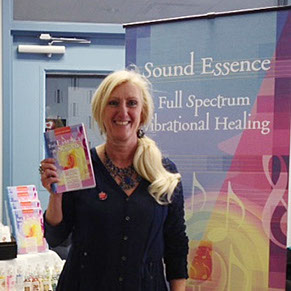
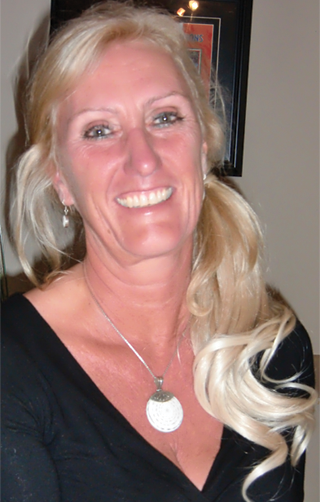
Evelyn Mulders is the founder of the Kinesiology College of Canada and senior faculty for the International College of Professional Kinesiology Practice, training students in Energy Medicine, since 1996. She owns and operates Holistic Tapestries Natural Care Center and is the Alchemist of Sound Essence vibrational remedies. Her passion for educating others has inspired her to write two published books, The Essence of Sound and Western Herbs for Eastern Meridians and Five Element Theory and develop a healing system with Whispering Herbs Healing Cards.



30 SECOND VIDEO
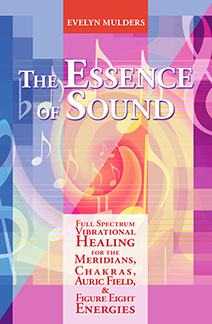

The Essence of Sound
Energy Medicine is the medicine of the future and sound has been predicted to be the healing modality of the 21st century.
This book “The Essence of Sound” blends both of these predictions to offer the reader a unique understanding of how Energy Medicine has the potential to enhance health, vitality and personal growth.
The sole purpose of this book is to help the reader take the mystery out of understanding the three-dimensional aspects of the energy body and bring awareness to the healing potential of nature’s resources through the use of vibrational remedies. Some have claimed this book to be an encyclopedia of Energy Medicine
Western Herbs
Western Herbs for Eastern Meridians and
Five Element Theory Manual
is a fantastic herbal manual outlining the biochemical applications of the herbs along with what blocked emotion is causing imbalance and the spiritual connection to support the whole being in an attitudinal shift.
A quick introduction to "The Essence of Sound" book.
Listen to Evelyn speak about herbs and how they support your body on all three dimensions: physical/emotional and spiritual

{About Sound Essence}
Welcome to the home of Sound Essence developed by Evelyn Mulders.

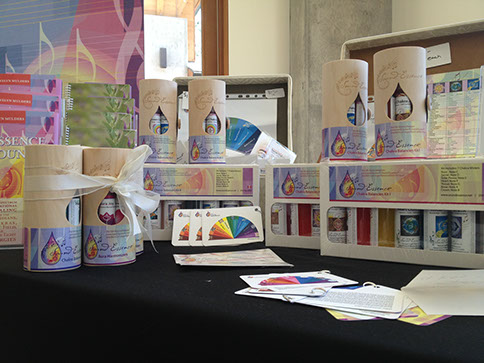
Sound Essences are vibrational remedies that have been charged with sound waves to help balance the energy body.
Everything in the universe is in a state of vibration, including us. Life is sound and sound brings life to the earth, which is why using the power of sound energy is one of the simplest and most effective methods of balancing the body's energy system. Sound Essences embrace the healing vibrations, which are found in: Sound, Colour, Crystals and Gems, Positive Word Affirmations, Sacred Geometry, Symbols, Aroma and Homeopathy. These healing vibrations interact with the physical and energetic body to produce full spectrum vibrational healing for energy balancing. Aware or unaware, visible or invisible, these vibrational remedies impact us powerfully. It is through using the full spectrum of vibration that the true essence of our being is found.
Sound Essences are pioneering remedies that embrace the principles of vibrational medicine which is based on the principle that all illness, disease, or imbalance is characterized by blockage in the channels on some level: either in the auric field, chakras, meridians, arteries, veins, lymph or nerves. When there is a blockage in a channel, the related system or organ no longer vibrates at a healthy frequency, causing discomfort or sickness. Sound Essences restore the healthy vibration to the etheric body allowing the physical body to rebalance itself. Every individual who works to raise his or her vibrational level to enter into a clear and balanced frequency is contributing to the alignment and enrichment of this world.
Shifting your vibration is the "Secret" to shifting you into the life of your dreams!
{Discover the Five Dimensions of
Sound Essence Energy Medicine}
The secret to the "Law of Attraction" is all about your vibration.
First Dimension - Meridians
Physical - Meridians
Energize your body with Meridian Vitalizers.
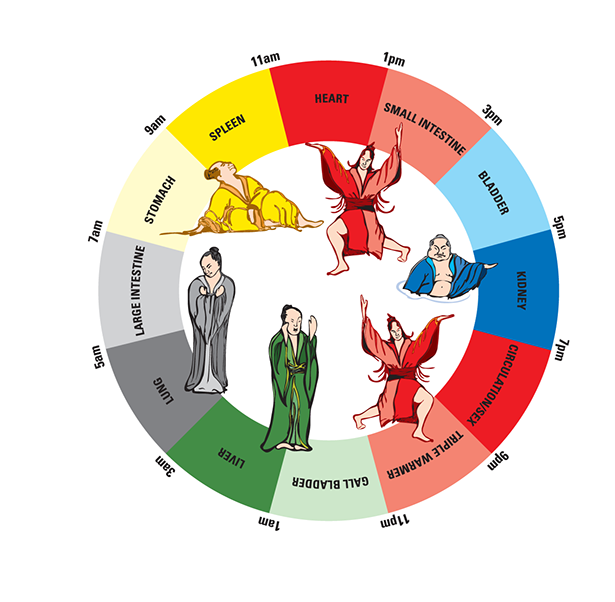
Meridians are the energetic interface from the physical to the etheric. The 14 main meridians run under the skin and emanate about 2 inches above the skin. They are densest of the three energy fields and relate most closely to the physical body supporting physiology. Keeping meridian chi flowing helps one stay vitalized and energetic.
Meridians vitalize your physical body.
Learn More
Second Dimension - Chakras
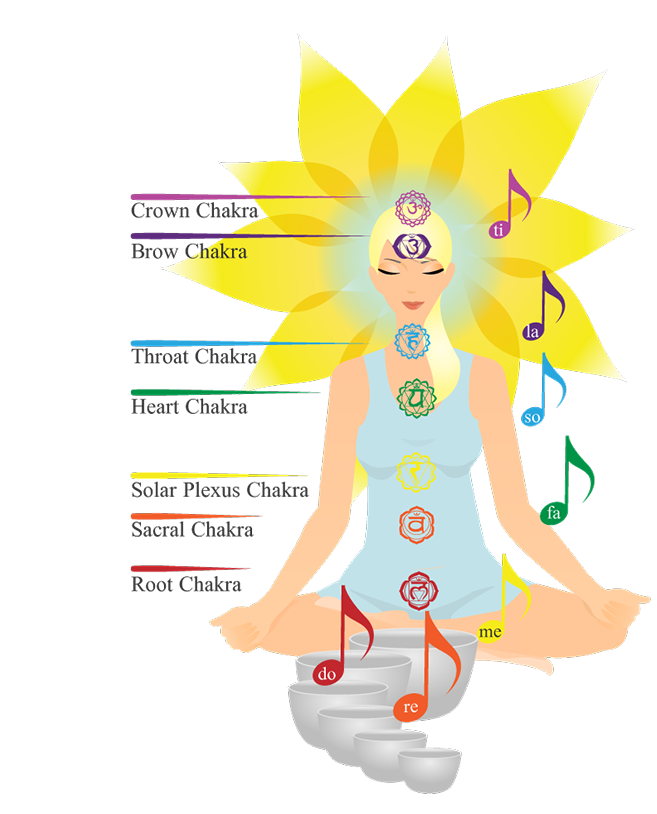
Emotional - Chakras
Temper your emotions with Chakra Balancers.
Chakras spin about 2-12 inches away from the physical body and filter incoming information from the 7 senses. Chakras are mostly responsible for our moods and feelings. If the 7 Chakras are balanced, then information picked up from all the senses can be sorted in a way that supports loving conscious action and deliberation. Keeping the chakras balanced promotes emotional stability.
Chakras balance your emotions.
Third Dimension - Aura
Mental - Auric Field
Symphonize your mind with Aura Harmonizers.
The auric field is an ovoid emanation made up of 7 surrounding layers of decreasing density radiating vibration up to 3 feet away from the body. Each layer is a mini world with its own sense of spiritual purpose, determining our experience within our physical reality. The auric field acts as a secondary immune system bringing us in tune with nature. Keeping the auric field in perfect harmony offers that euphoric sense of freedom and oneness with the universe.
The Aura harmonizes your spiritual connection.
Learn More
Learn More
Create a frequency match for your new desired outcome in three simple steps and experience the delight of manifesting your dreams and desires.
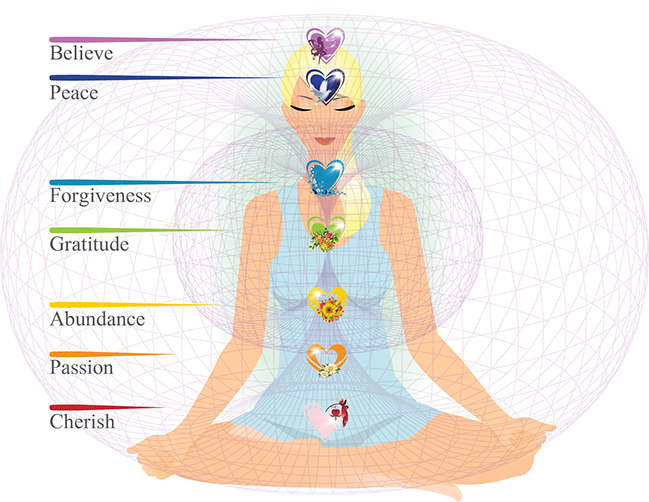
Fourth Dimension - Torus
Intuition - Inner Senses
Amplify your love with Heart Tones
The torus, representing the electro-magnetic field surrounding us can expand up to eight feet, some researchers suggest up to 5 miles. It has the potential to pick up all information surrounding us. Because it’s axis lies in the centre of our heart, it connects our inner senses with those around us. We can pick up the mood and feelings of everyone around us and we call this our intuition.
The torus connects us to universal love.
Learn More
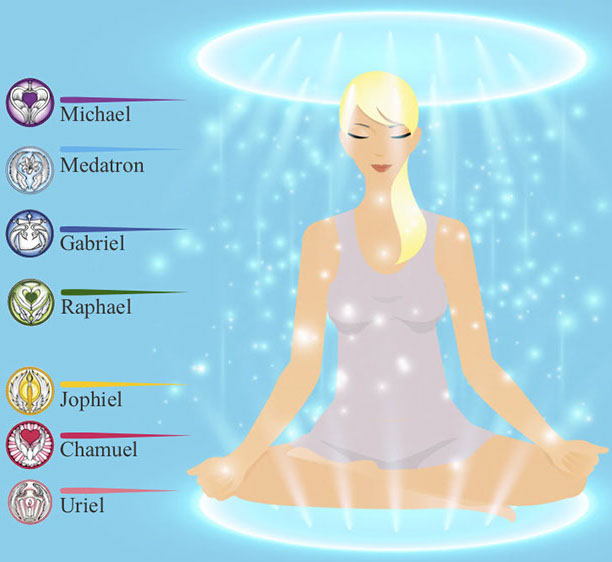
Fifth Dimension - Hologram
Spiritual - Soul
Embrace your Divinity with Archangel Blessings
The Holographic perspective is a completely all-encompassing way of thinking and healing. It’s so very different from our normal, linear, perspective of living. Changing one little thing in the hologram, all at once changes everything else in the big picture.
Archangels introduce a hologram from beyond our universe. They enter our universal hologram to expand our perspective of possibility and reality. Beyond our realm of material creation that is limited to time and space lies oneness with All-That-Is. Experiences of eternal peace and unconditional love can be initiated with the Archangels.
Archangels are the hologram of Source.
Learn More
{Energy Evaluation}
Some simple steps to shift your vibration instantly.
The secret to the "Law of Attraction" is all about your vibration.

-crop-u19251.png?crc=3919541888)
-crop-u19245.png?crc=4248783440)

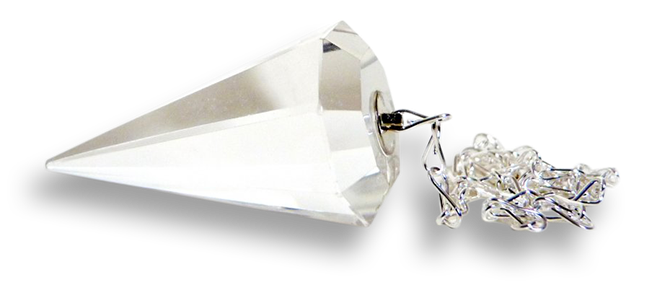
By using a pendulum or muscle testing you can self-evaluate to find your energy levels relating to any goal. A goal stresses your energy field. If it didn't you would already have what you desire. This 3 dimensional system offers you an opportunity to fast track your way through the law of attraction by supporting your physical/emotional and spiritual self by simply misting. Enjoy!
Energy Evaluator
Meridian Evaluator
Chakra Evaluator
Aura Evaluator
Heart Evaluator
Archangel Evaluator
Click on picture to download pdf
Vitality Evaluator
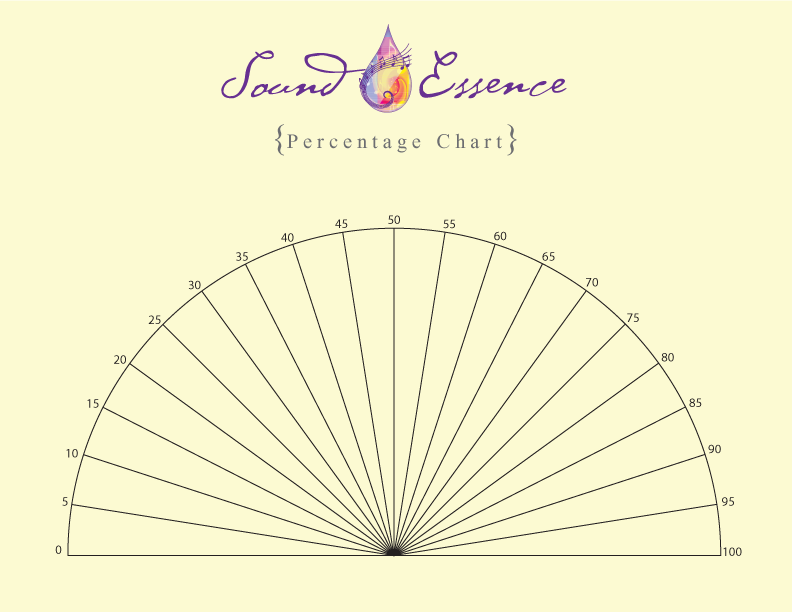
- Check your life energy in the clear.. (without a goal).. using the percentage chart.
- Re-check your life energy with a goal using the percentage chart. (notice that your life energy is now lower because you have added stress into your energy field by inviting the goal)
Check vitality on a scale between 0-100
Click on picture to download pdf
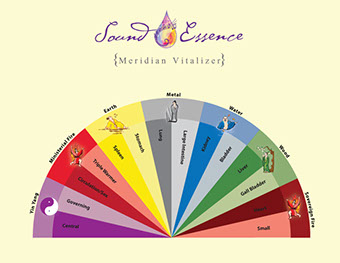
Meridian Evaluator
- Check which meridian needs support to bring you into the frequency of your goal.
- Find the Sound Essence Meridian Vitalizer indicated by the chart and Mist above and in front of your self and walk under the falling mist.
- Re-check your life energy using the percentage chart and notice the improvement.
Check which meridian/element needs support
Click on picture to download pdf
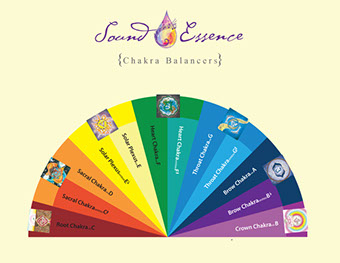
Chakra Evaluator
- Check which chakra needs support to bring you into the frequency of your goal.
- Find the Sound Essence Chakra Balancer indicated by the chart and Mist above and in front of your self and walk under the falling mist.
- Re-check your life energy using the percentage chart and notice the improvement.
Check which chakra needs support
Click on picture to download pdf
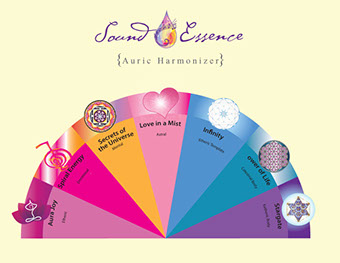
Aura Evaluator
- Check which auric band needs support to bring you into the frequency of your goal.
- Find the Sound Essence Heart Tone indicated by the chart and mist above and in front of yourself and walk under the falling mist.
- Re-check your life energy using the percentage chart and notice the improvement.
Check which auric field band needs support
Click on picture to download pdf
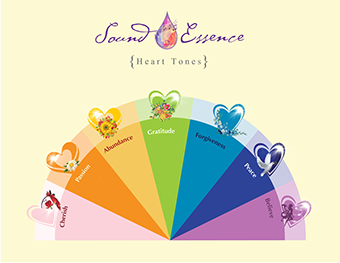
Heart Evaluator
- Check which aspect of your heart needs support using the Heart Tone Evaluator.
- Find the Sound Essence Heart Tone indicated by the chart and mist above and in front of yourself and walk under the falling mist.
- Re-check your life energy using the percentage chart and notice the improvement.
Check which aspect of the heart needs support
Click on picture to download pdf
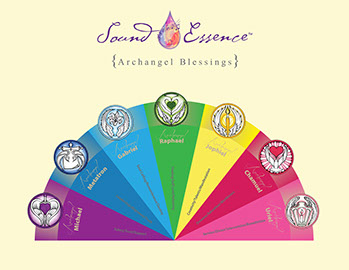
Archangel Evaluator
- Check which Archangel connection needs support to bring you into the frequency of your goal.
- Find the Sound Essence Heart Tone indicated by the chart and mist above and in front of yourself and walk under the falling mist.
- Re-check your life energy using the percentage chart and notice the improvement.
- Now think about your goal and notice how it feels different!
Check which Archangel connection needs support
CONGRATULATIONS! You Just Shifted Your Frequency.
You steered your vibration towards a desirable outcome!
Sound Essence vibrational remedies get you into the flow of where you wanna go.
Keeping your High Vibes ALIVE!
Distributor Contacts
Canada
Alberta
Reflexology Experience
info@reflexexp.com | www.reflexexp.com
British Columbia
Banyen Books & Sound
thefolks@banyen.ca | www.banyen.com
Dare to Dream
daretodreamkelowna@gmail.com | www.daretodreamkelowna.com
Reflexology Experience
info@reflexexp.com | www.reflexexp.com
Saskatchewan
Aimee
aimeeunlimited@gmail.com | indulgencelifestyle.ca
Ireland
Roisin Graham
roisingraham10@gmail.com | roisingraham.com
Italy
Ailight
info@ailight.it | www.ailight.it/en
Mexico
Linda Easthouse
linda@easthousecentre.com | naturalbioenergetics.ca
United Arab Emirates
Dubai
Sahar Palmer
sahar@saharpalmer.com | www.saharhuneidi.com
United Kingdom
Helena Arguelles
info@helena-arguelles.com | www.helena-arguelles.com
Minqua Dang
Alex Russell-Stoneham
Alex@AlexRussell-Stoneham.com | AlexRussell-Stoneham.com
United States
Georgia
The Kinesiology Bookstore
orders@kinesiologybooks.com | kinesiologybooks.com
Michigan
Darcy Lewis
info@darcy-lewis.com | darcy-lewis.com
New Mexico
Janice Baker
janicebakermht@gmail.com | soundessenceusa.com
New York
Dr. Lloyd Katz
lloydkatzdc@icloud.com | www.chiropracticbiotuneups.com
Washington
Julie Haynes
Spirals